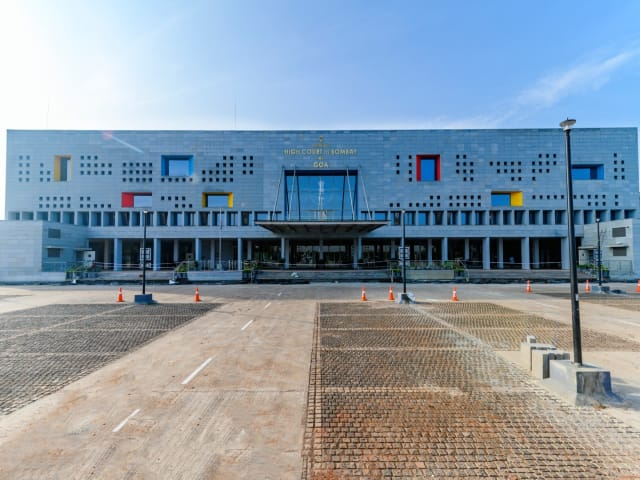
The High Court has issued notice to the Goa government in a public interest litigation challenging recent amendments to the state’s building regulations that permit construction on roads as narrow as three metres. The petitioners contend that these relaxed norms severely jeopardise public safety by obstructing access for fire engines and ambulances—a vulnerability fatally exposed during the recent Arpora nightclub fire.
Filed by retired PWD Executive Engineer Ganpat Vishnu Sidhaye and urban planner Tahir Fernando Noronha, the PIL targets the Goa Land Development and Building Construction (Amendment) Regulations, 2023. Among the respondents are the State of Goa, the Town and Country Planning Department, the Directorate of Fire and Emergency Services, and the Director of Panchayats.
The petition challenges Annexure XII and Note 16 to Regulation 6A.4, which legally permit residential building construction on roads with a minimum width of three metres. The petitioners contest the regulatory “deeming fiction” introduced in Note 16, which mandates that physical obstructions—such as illegal structures, religious shrines, encroachments, and culverts—should not be counted as reducing the available access road when computing road width for approvals.
The PIL objects to a provision allowing development even if the access road is choked by bottlenecks—like existing compound walls or old structures—provided they do not exceed 75 metres in length.
The regulations mandate a 10-metre access road exclusively for “high-rise buildings,” inexplicably omitting “Special Buildings” such as hotels, assembly buildings, industrial buildings, and educational institutions from this strict safety standard. Despite the Director of Fire and Emergency Services recommending a minimum road width of 12 metres for high-rises to accommodate 45-tonne fire engines, the state arbitrarily set the limit at 10 metres.
The petitioners point out that the combined width of a standard fire tender (2.5 metres) and a small car (1.44 metres) makes it physically impossible for emergency vehicles to navigate a three-metre road, let alone one plagued by parked cars or debris. Furthermore, the diluted norms contradict the National Building Code of India and the Indian Roads Congress guidelines, both of which stipulate a minimum right-of-way of six metres.
The PIL cites the December 6, 2025, fire at the “Birch by Romeo Lane” nightclub in Arpora, which claimed 25 lives. According to the petition, the nightclub—classified as a “Special Building”—was situated in narrow lanes that forced the fire brigade to park nearly 400 metres away from the blaze, critically delaying rescue operations.
The State of Goa recorded 2,242 fire incidents between 2020 and March 2025—roughly one fire a day—underscoring the persistent need for rapid emergency access.
The PIL seeks a judicial declaration that the impugned 2023 amendments are unconstitutional, arbitrary, and violative of the right to life and safety guaranteed under Articles 14 and 21 of the Constitution.
The High Court will next hear the matter on December 7.